
Caught Still
Why do certain places continue to work on us long after we've left them?

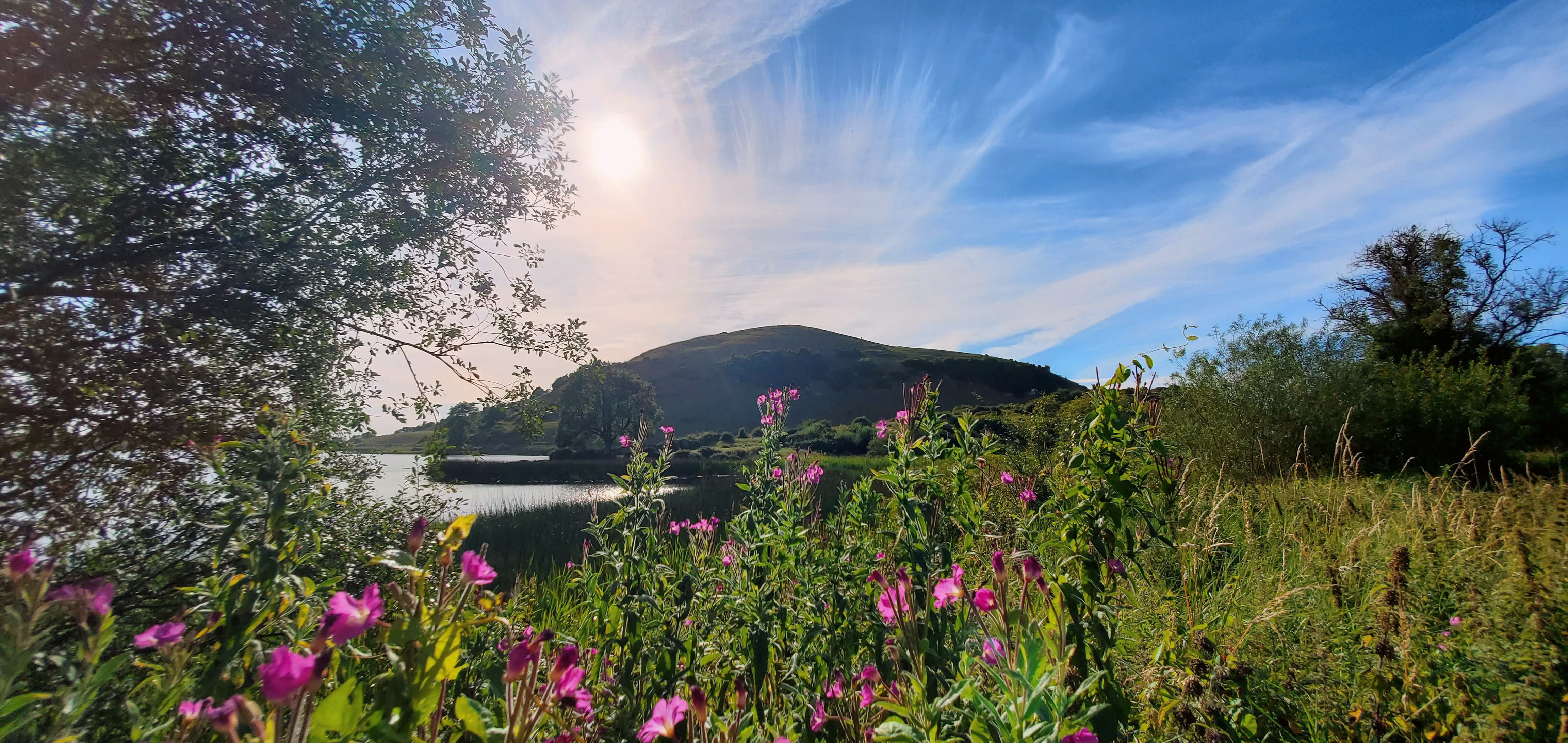
The Irish poet Moya Cannon describes standing before a summer meadow in Árann and finding herself unable to leave it entirely behind. Years later, writing to a friend, she recalls being “caught, are caught still, in the blurry, summery sway of it.”
I love that line! Not because it describes a particular landscape, but because it swirls a paintbrush through my imagination and transports me. Some places do not simply remain where we left them. They continue to live within us. We carry them forward into new conversations, new seasons of life, and new ways of understanding ourselves.
For reasons I have never fully understood, there are places that seem to take up residence within us. We leave them, yet they do not leave us. Years pass. Entire chapters of life unfold. And still they return in dreams and conversations, in those quiet moments when memory rises and places us back within a landscape we thought we had left behind.
Ireland has always been one of those places for me.
Sedona, however, surprised me.
I have only been there once, yet something about the red rock landscape evoked a sense of reverence that remains alive within me to this day. The formations rise from the earth with such presence that they feel less like scenery and more like beings. They seem ancient and watchful in the way they dominate the horizon. I do not mean this literally. I mean that the landscape possesses a quality beyond its physical form. Standing among those red cliffs and stone cathedrals, I often had the feeling that I was not merely observing the landscape, but that I was humbly in relationship with it.
On the surface, Ireland and Sedona could hardly be more different. One is shaped by green hills, stone walls, ancient stories, and Atlantic weather. The other rises in red rock formations beneath an immense desert sky. Yet both have exerted a similar pull upon my imagination. Both remain strangely active in my inner life long after my departure.
I have often wondered whether this is simply nostalgia. But nostalgia alone seems insufficient. What I am describing is not merely affection for a place or longing to return. It is the feeling that certain landscapes continue to unfold within us. They seem to have more to say than we can understand upon first encounter.
This mystery has accompanied me for years and has led me into the work of scholars such as Jan Assmann and John Carey, as well as the writings of the Irish philosopher John Moriarty. Though their approaches differ dramatically, all three invite us to consider the possibility that place is never merely place. Landscape may be geography, certainly. But it may also be memory, story, threshold, inheritance, and encounter.
Scholars of cultural memory have long explored how communities remember through stories, rituals, symbols, and traditions. Assmann argues that memory is not merely an individual possession but is carried across generations through shared cultural forms. Memory, in this sense, lives not only in minds but in practices, narratives, and places.
This raises an intriguing possibility. What if certain landscapes become repositories of cultural memory? Not because the land itself literally remembers, but because human beings continuously inscribe meaning upon it. Stories accumulate there. Histories unfold there. Rituals are performed there. Generations encounter the same hills, rivers, caves, and shorelines, leaving traces that shape how those places are experienced by those who come after.
The Irish scholar John Carey, in his study The Location of the Otherworld in Irish Tradition, notes that early Irish accounts frequently situated encounters with the Otherworld within the landscape itself. He writes:
“Otherworld beings are depicted as living within hills, beneath lakes or the sea, or on islands in lakes or off the coast; there are also tales of halls chanced upon in the night, which vanish with the coming of day.”
The significance of this observation extends beyond medieval Irish literature. What is striking is the extent to which landscape functions as threshold. Hills, lakes, caves, islands, and bodies of water are not merely scenery. They become places where another dimension of reality may be encountered.
Although they approach the subject from different directions, both Carey and Moriarty seem interested in a world that is more permeable than modern assumptions often allow. Carey arrives there through the study of texts. Moriarty arrives there through what he called “Silver Branch perception”, a way of seeing in which the world becomes sentient and newly alive. In both cases, landscape appears as something more than geography. It becomes a participant in human experience.
Several years ago, while hiking in Sedona, Arizona, I found myself confronting these questions in a deeply personal way. The hike had long since exceeded my plans for the day. I had set out expecting a few hours on the trail. Instead, I found myself deep into the landscape, carrying too little water, increasingly hungry, and uncertain how much farther I should go.
At one point I stopped. The trail ahead seemed to demand more from me than I was certain I could give. The footing was uneven. The climb appeared steeper than I wanted. I remember standing there and trying to reason with myself.
“You have seen enough beauty.” That was the thought. “You have seen enough. There is no need to push farther. Be grateful for what you have already experienced. Turn around. Conserve your energy. Find your way back.”
Looking back, what strikes me is that this was not the voice of fear. It seemed entirely reasonable. Perhaps it was even wise. And yet something unexpected happened.
Two young girls passed me on the trail. I remember noticing their shoes because they seemed strangely unsuited to the terrain. For reasons I still cannot fully explain, the sight of them altered something in me. A few moments later, I found myself climbing.
What awaited me at the top exceeded anything I could have imagined from below. A vast expanse of red rock opened in every direction. The landscape seemed to stretch endlessly beneath the desert sky. I remember standing there in a state that was equal parts exhaustion, relief, and wonder. Whatever argument I had been making to myself lower on the trail had dissolved completely.
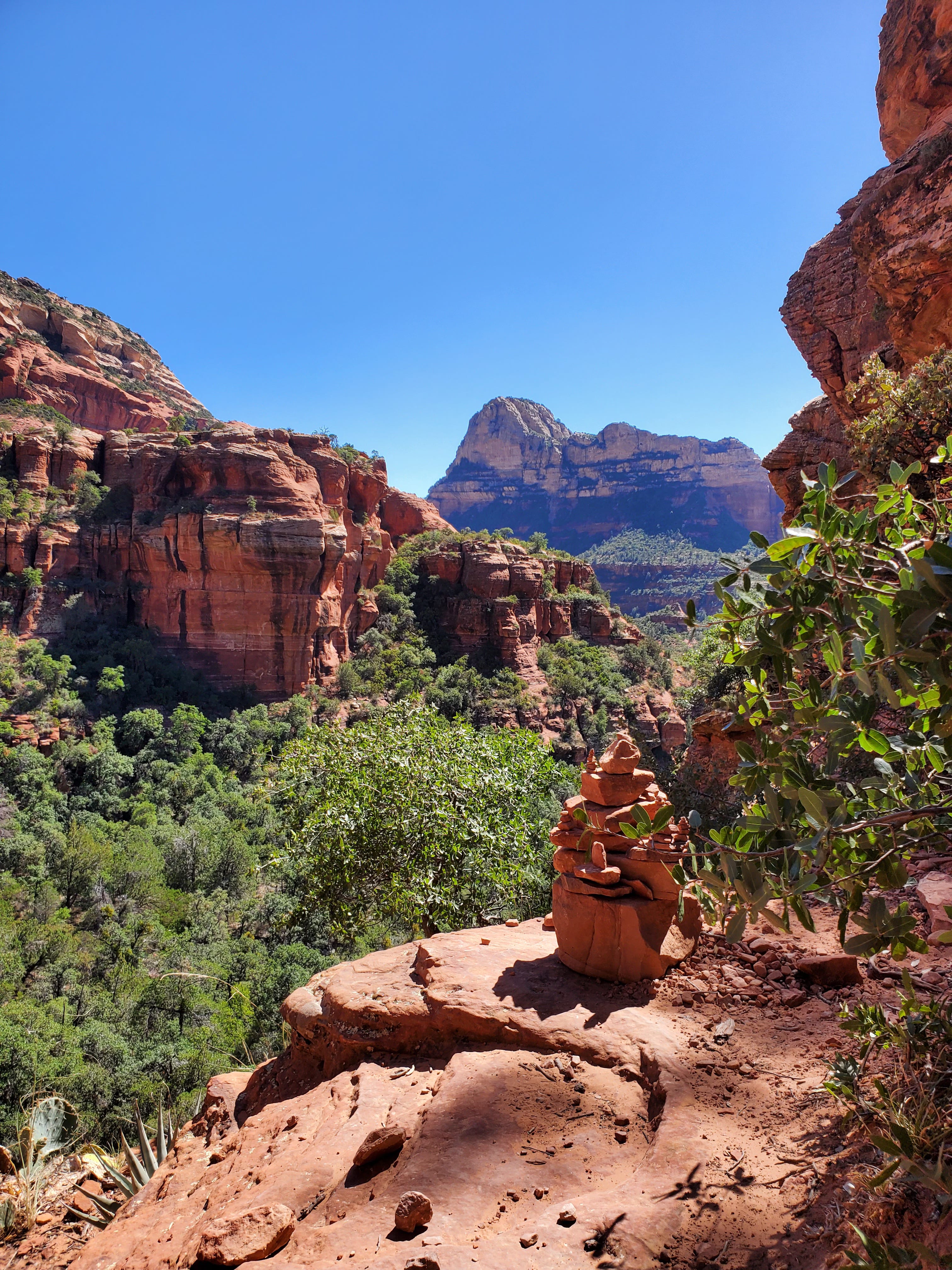
The view itself would have been enough.
Yet what has remained with me even more than the beauty was the non-ordinary sense that I had been led there. At the time, I knew nothing of the history of the place. Only later did I learn that the caves and dwellings I encountered had once been home to Indigenous peoples. That discovery altered my understanding of the experience without diminishing its mystery. In fact, it deepened it.
What I had initially experienced as a powerful encounter with landscape gradually became intertwined with questions of history, memory, and stewardship. I found myself wondering whether the feeling of presence I had experienced was solely my own projection or whether it emerged, at least in part, from entering a landscape already saturated with centuries of human relationship and meaning.
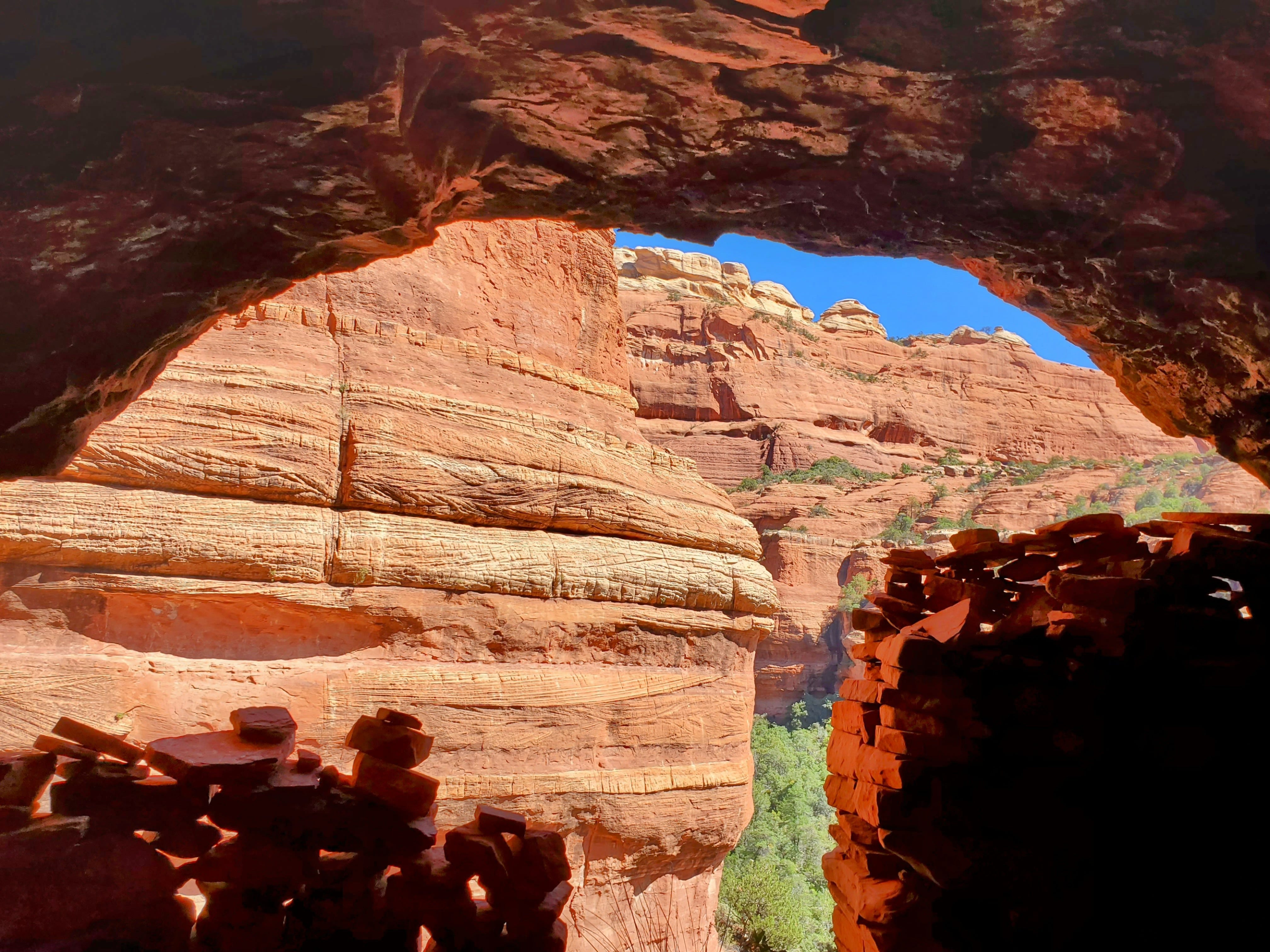
I still do not have an answer to that question.
What I know is that the experience has continued to unfold for years. Subsequent conversations, unexpected discoveries, and later reflections have repeatedly returned me to that day. Rather than resolving the mystery, each new layer has made it richer.
The more I learned, the more the landscape seemed to expand rather than contract.
In this sense, I think Cannon’s poem offers more than a beautiful image. It offers a way of understanding why certain places remain alive within us. Her meadow in Árann is no longer simply a meadow. It has become part of her interior landscape. She was caught by it and, years later, remains caught still.
I have come to think that some places work this way. They are never exhausted in a single visit, a single story, or a single interpretation. Meaning emerges gradually. History discloses itself as does memory. The landscape itself seems to disclose new dimensions over time. What initially appears to be a place becomes something more complex and layered.
This is where Assmann’s work becomes especially interesting. Cannon’s poem offers a personal expression of a phenomenon that Assmann approaches from the perspective of cultural memory. If cultural memory is carried through stories, symbols, and traditions, then perhaps certain landscapes become meeting places between personal experience and inherited memory.
We arrive carrying our own questions. The land greets us holding layers of story, memory, history, and relationship that long predate our arrival. It invites us into a conversation already underway. Meaning emerges through the encounter and continues to evolve long after we have left the place itself.
To say this is not to claim that every powerful experience must be interpreted in supernatural terms. Nor is it to argue that all traditions understand landscape in the same way.
Instead, I find myself returning to a simpler question. Why do certain places feel alive with significance? Why do some landscapes continue to exert a pull upon us years after we have left them? Why do they continue to call us back, if not physically, then in memory, imagination, and reflection?
The medieval Irish filid were, among many other things, custodians of memory. They preserved stories, genealogies, and relationships between people and place. Indigenous traditions across Turtle Island likewise preserve ways of understanding land that emphasize relationship, reciprocity, and attentiveness.
John Moriarty devoted much of his life to recovering a mode of perception in which the world appears not as inert matter, but as something vibrant and alive.
What these traditions share is not a single worldview. Rather, they share a profound respect for attention. Perhaps certain places refuse to leave us because they invite us into a conversation that began long before our arrival and will continue long after we are gone.
If so, the question is not whether the land is speaking. The question is whether we are willing to learn how to listen.
Beautiful. For me, Ireland's southwest coast, Assisi, and Santa Fe.