
Thin Places
Where memory, myth, and landscape converse

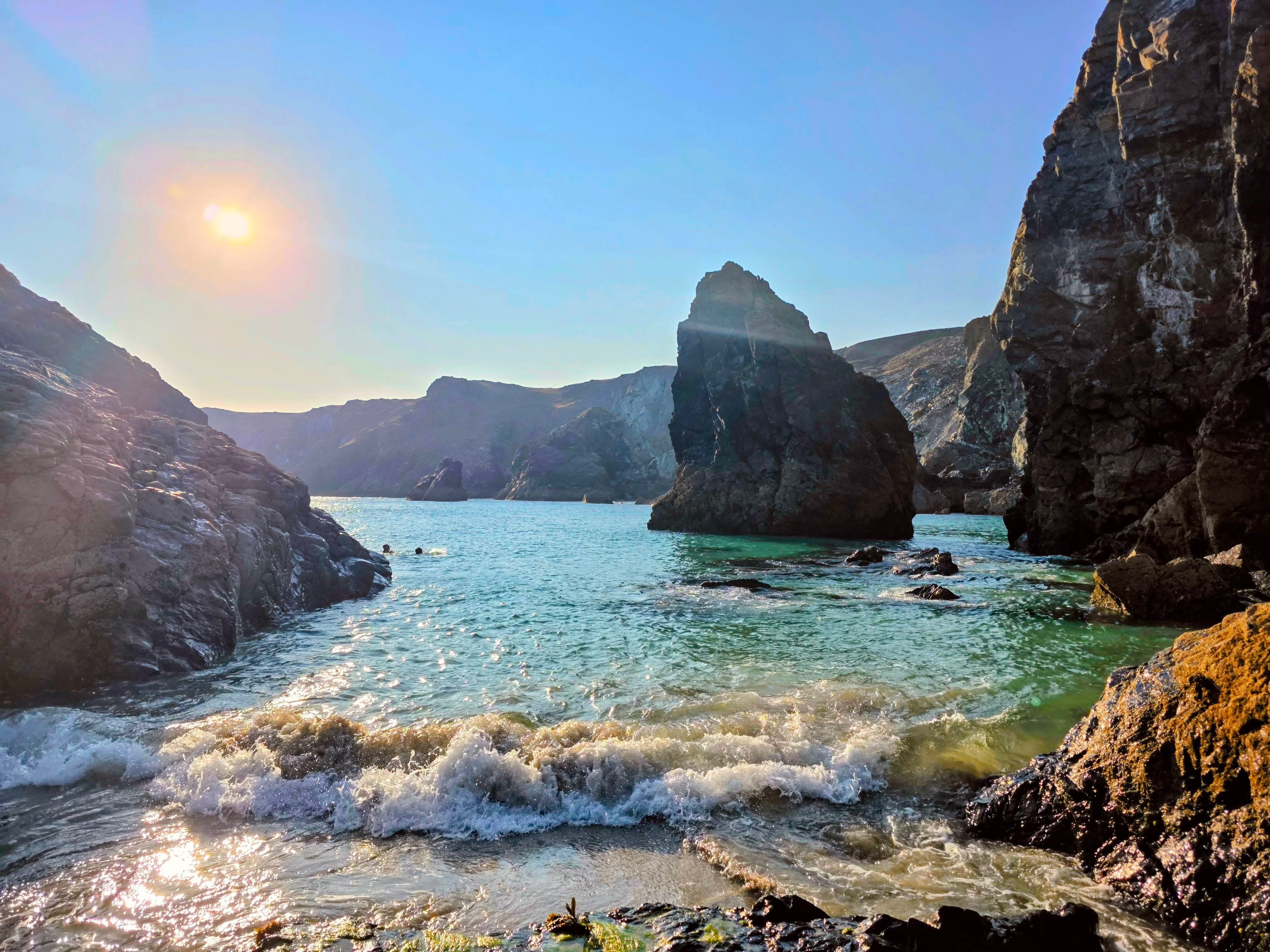
But such a tide as moving seems asleep,
Too full for sound and foam,
When that which drew from out the boundless deep
Turns again home.
Alfred, Lord Tennyson, Crossing the Bar
It’s a threshold of sorts, a place where time and space blur. I love the way storyteller and mythologist Martin Shaw speaks of it…“Between the time of dog and wolf, the dimpsey time.” Where day meets night and sea meets sky, these are the thin places. The Celts spoke of them as places where the veil between worlds grows thin. I have begun to wonder if that isn’t because they invite us into a different way of seeing.
Kynance Cove is one of those places.
The beach is revealed only at low tide, a fresh palimpsest sculpted each day by the Atlantic. By morning, the shoreline will have remade itself once again.
Even its geology belongs to the language of thresholds. The Lizard Peninsula is unlike anywhere else in Britain, a fragment of ancient ocean floor thrust to the surface hundreds of millions of years ago. Sailors once searched its cliffs for lights to guide their way into safe harbor, and the first invisible wireless communication was sent across the sea.
It feels somehow fitting that a place suspended between land and water should also become a place where unseen things travel.
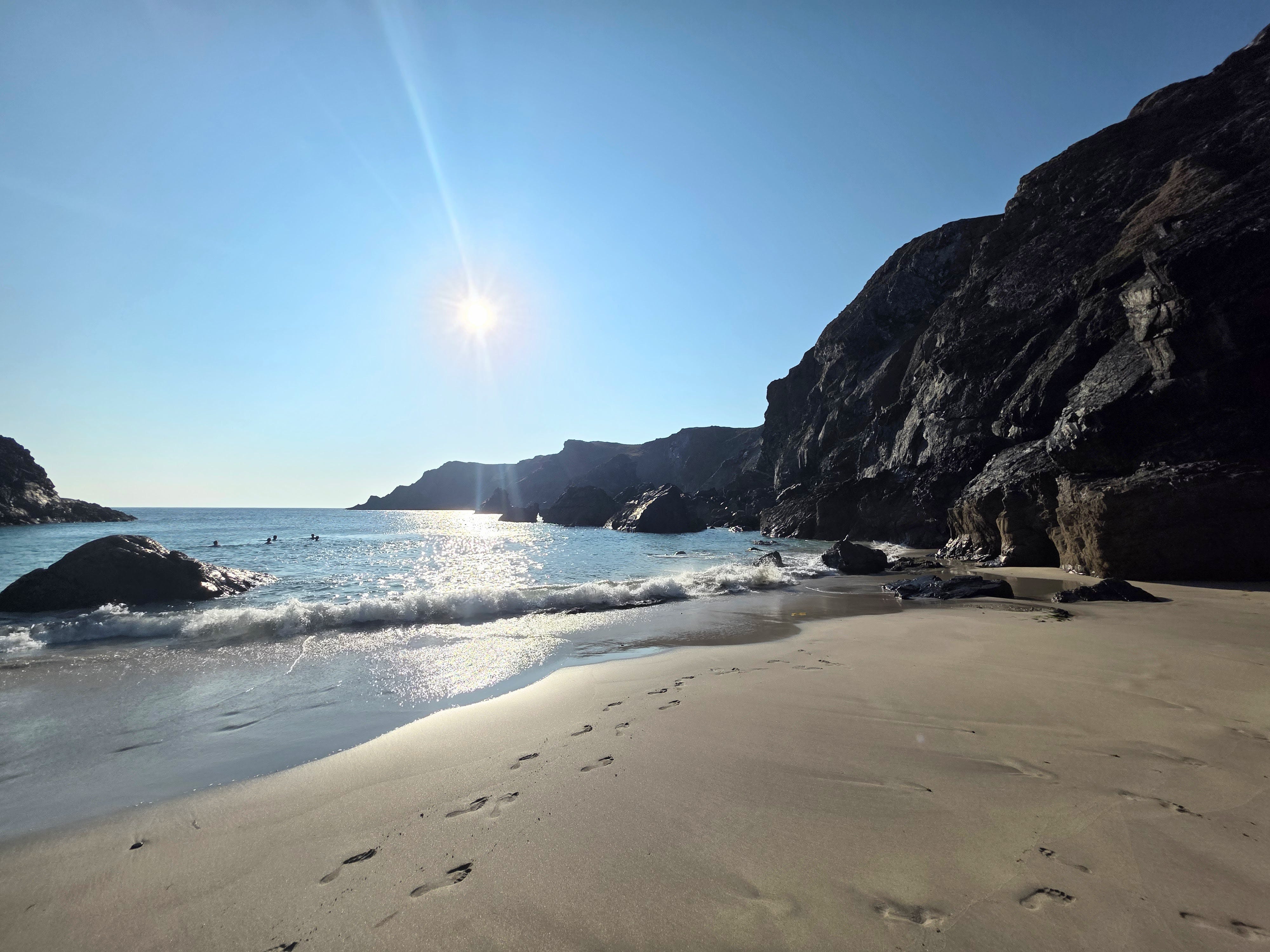
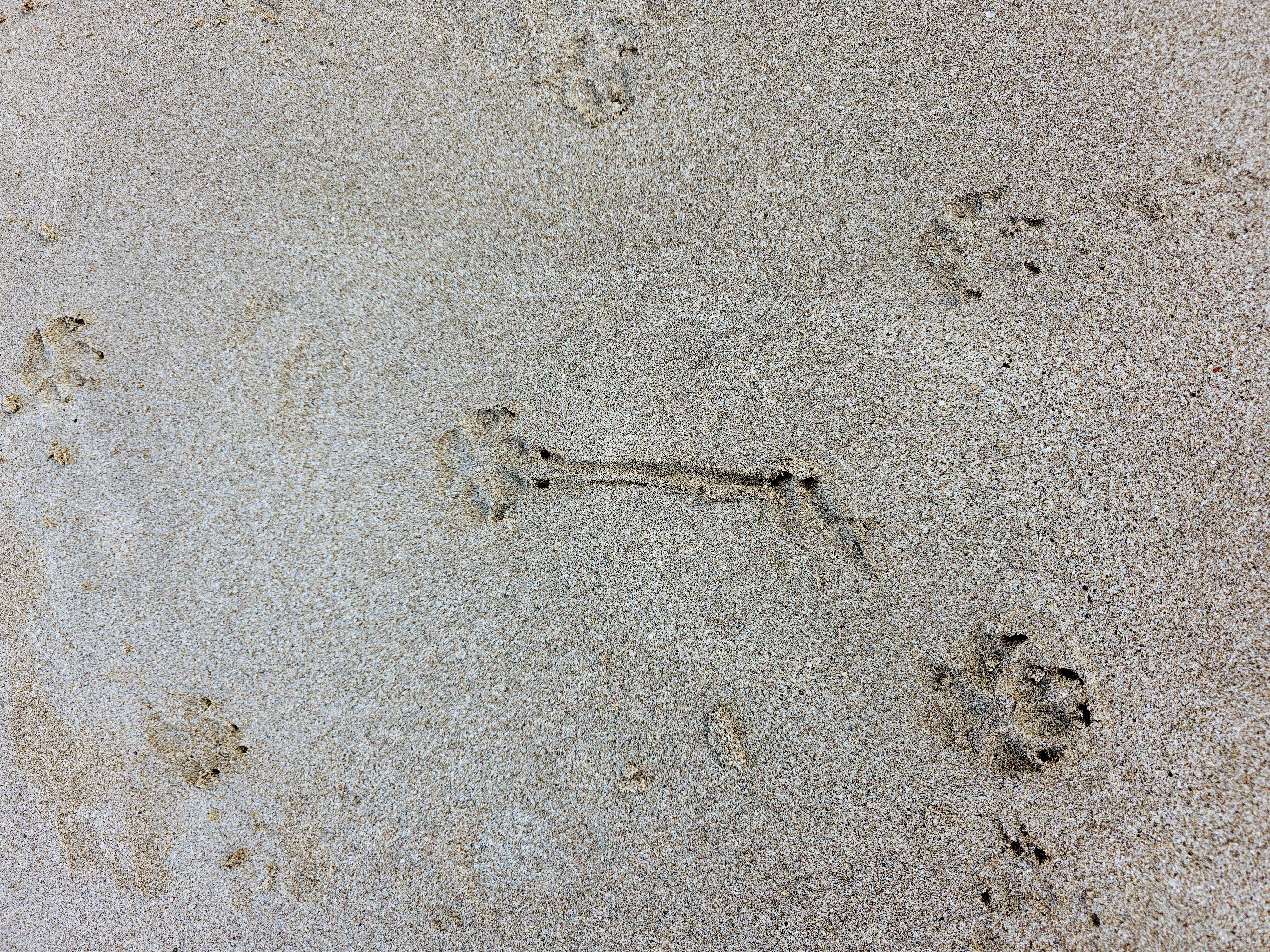
As I wandered the shoreline on that warm July evening, I found myself paying less attention to the dramatic cliffs than to the small things such as human footprints, dog prints, and bird tracks. The delicate evidence of lives briefly intersecting before the tide reclaimed them.
As I looked across the sand, I realized this landscape would never look exactly this way again. Within hours, the Atlantic would gather every footprint into itself. By morning, the beach would begin again. Yet, I couldn’t help wondering whether the people who had left those footprints would ever be quite the same.
The shoreline may erase their imprints. But perhaps they would carry this place within them for the rest of their lives.
I knew that I would.
One footprint caught my attention. To my eye, it looked like an old key. That made me smile. It resembled a sacred item in my mála naofa, my sacred bundle. Perhaps that is what thin places do, not because they open another world, but because they unlock forgotten ways of seeing this one, and with them, forgotten ways of making praise.
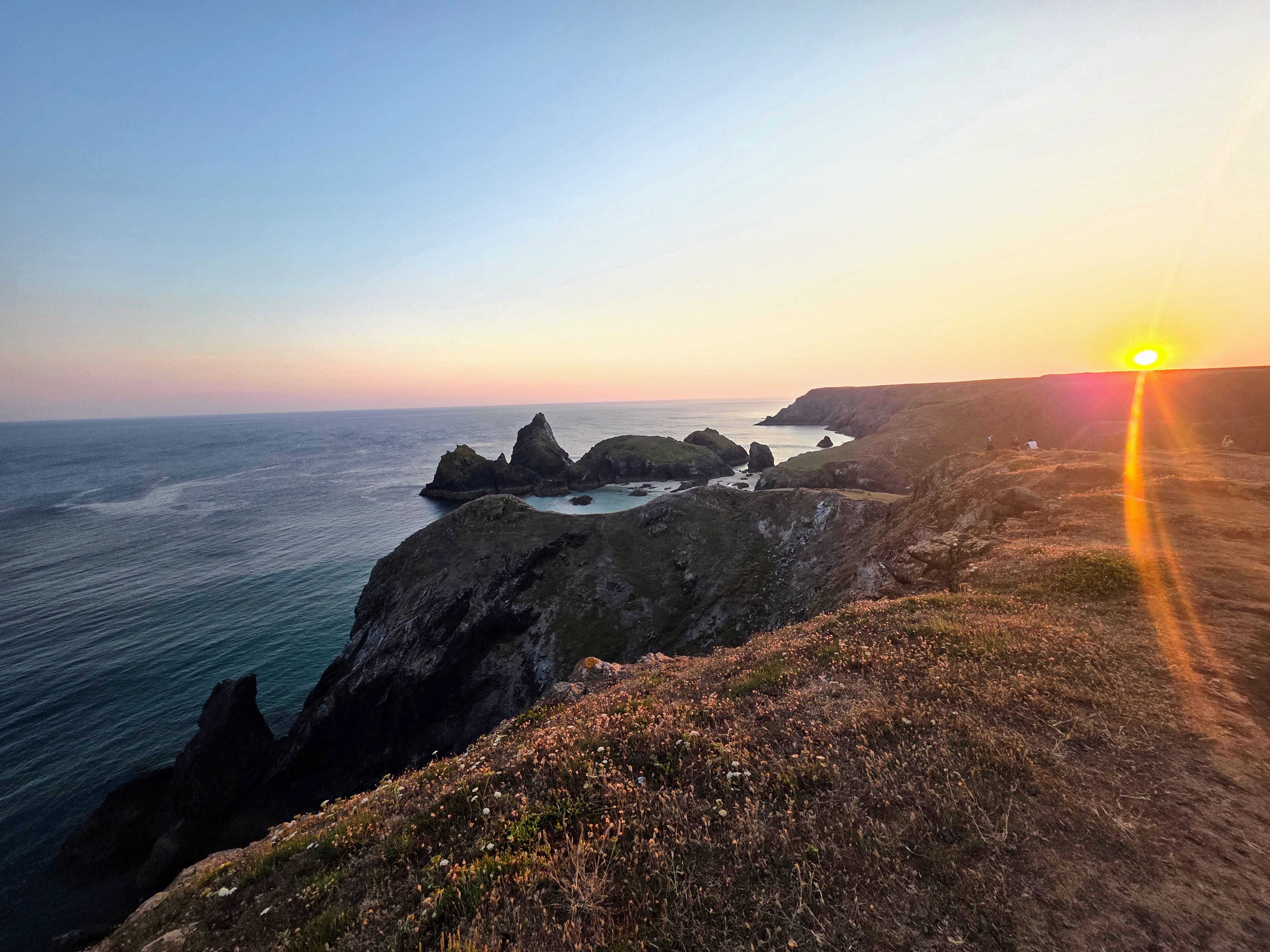
As the tide slowly began to reclaim the cove, I climbed back to the cliffs above Kynance Cove and found a place to sit. A few others had gathered there as well, all of us quietly watching the sun begin its descent toward the Atlantic.
It was there, as the tide rolled in, that something shifted. My eyes drifted to the island of sea stacks below. The sculpted serpentine stones seemed to gather themselves into the form of a sleeping giantess. Once I saw her, I couldn’t unsee her. The peninsula had become animate, not because it had changed, but because my way of seeing had.
I had come to Cornwall wanting more than simply to admire the landscape. I wanted to offer praise to it, to be dreamt by it, even claimed by it. As I sat overlooking the Atlantic with a handful of strangers watching the sun descend toward the horizon, the giantess seemed to awaken.
I found myself remembering the old Celtic stories, where landscape and myth are never entirely separate. As the tide rolled in, I imagined her long-lost lover, Manannán mac Lir, rising from the sea to gather her into his arms. Together they danced as the waves rolled in and out, in and out, each surge drawing them closer together.
For a few moments, myth and landscape no longer felt separate. Neither did time. There was only the sea, the rhythm of the tide, and an overwhelming sense of love and beauty. I felt so happy, so deeply content and appreciative. This, to me, was falling into the land’s dreaming.
Only later did I discover that Alfred, Lord Tennyson had stood on these same shores in July 1848. Just days earlier, his diary records simply, "Funeral. Land's End and Life's End." His journey into this landscape carried the weight of grief.
Mine did, too.
I had come to Kynance Cove on the eve of what would have been my late sister Jennifer’s fifty-second birthday. The next evening, I would speak about The Art of Dreaming Barley at the Penzance Literary Festival. Standing there in the liminal space between land and sea, I felt the boundary between us grow very thin. My sister did not feel absent. She seemed present within the landscape itself, shapeshifting into sea foam and salt air, into myth, and even into the sleeping giantess rising before me.
Standing there beside the Atlantic, I found myself returning to a conversation I’d been having for quite some time. Not simply to dream of the land, but to dream with it.
Later, when I read Tennyson’s diary, I wasn’t struck because his words explained my experience, but because they seemed to echo it:
"Glorious grass-green monsters of waves. Into caves of Asparagus Island. Sat watching wave-rainbows. Glorious ranks of waves and billows. By coast to Lizard Point: saw sunset thence."
Perhaps that is one of the gifts of a thin place. Across generations, it continues to awaken remarkably similar ways of seeing. I felt a deepening sense of kinship with the landscape and with ancestors whose imprints ever abide with me.
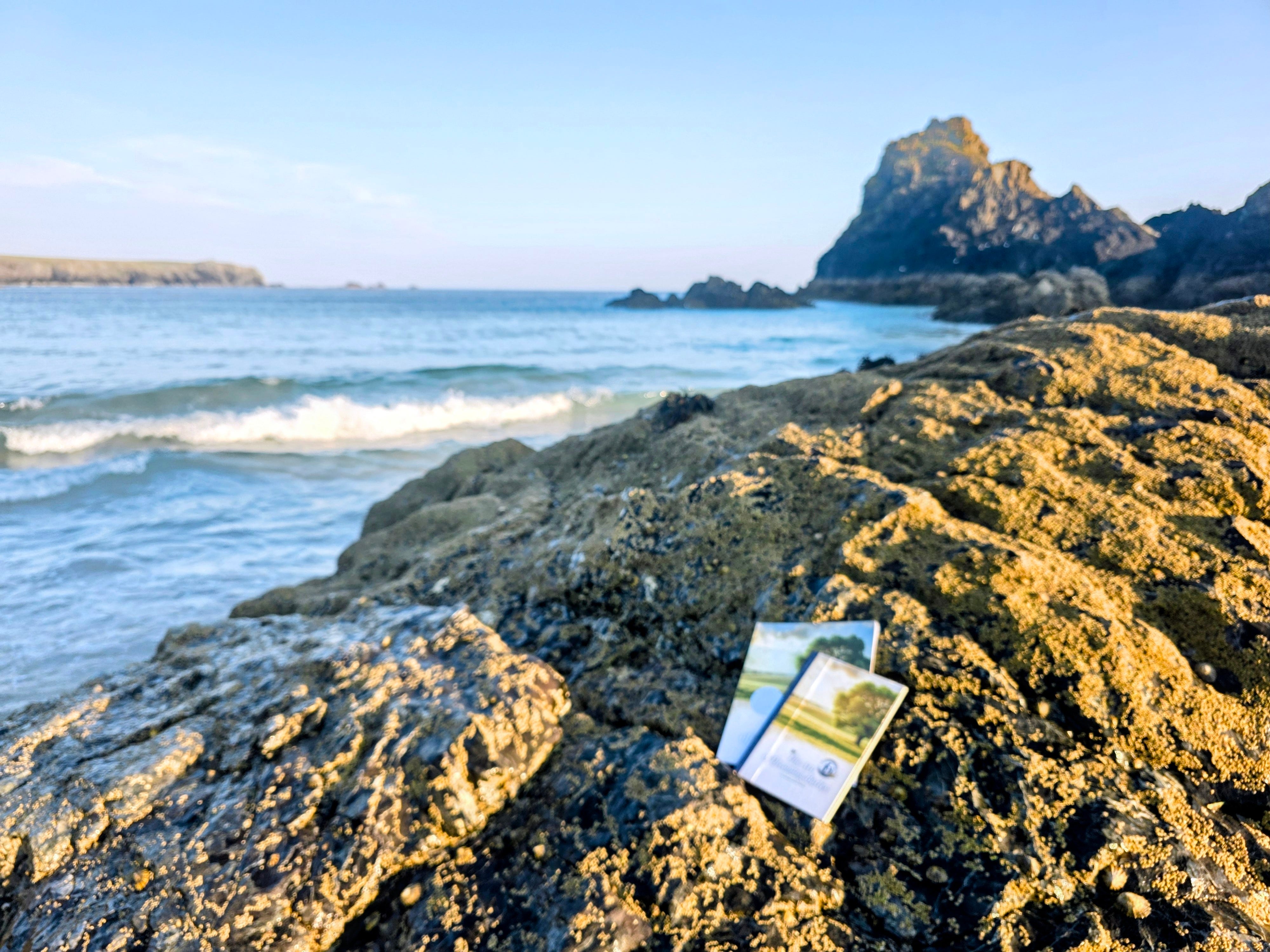
Before leaving Kynance Cove, I placed my little handmade book among the rocks for a photograph. At first, I thought I was simply documenting the journey and creating an image to share with the literary festival marketing team.
Looking at the image now, I think it was something else. The following evening, I would offer The Art of Dreaming Barley to readers at the Penzance Literary Festival on Jennifer’s birthday. But first, it felt important to offer it back to a living, breathing landscape whose beauty had nourished it. Not as an act of superstition, but as an act of gratitude to the Wild Atlantic and to liminal landscapes that helped bring it to life. To the tides that erase without truly forgetting and the ancient ocean floor that still remembers another world.
And perhaps, in some mysterious way, to the land itself. Because I left Cornwall with one quiet hope… that, for just a little while, I had not only dreamed of the land, but had been dreamt by it.