Walking the Bones
Part 2 of the Loughcrew Reflections

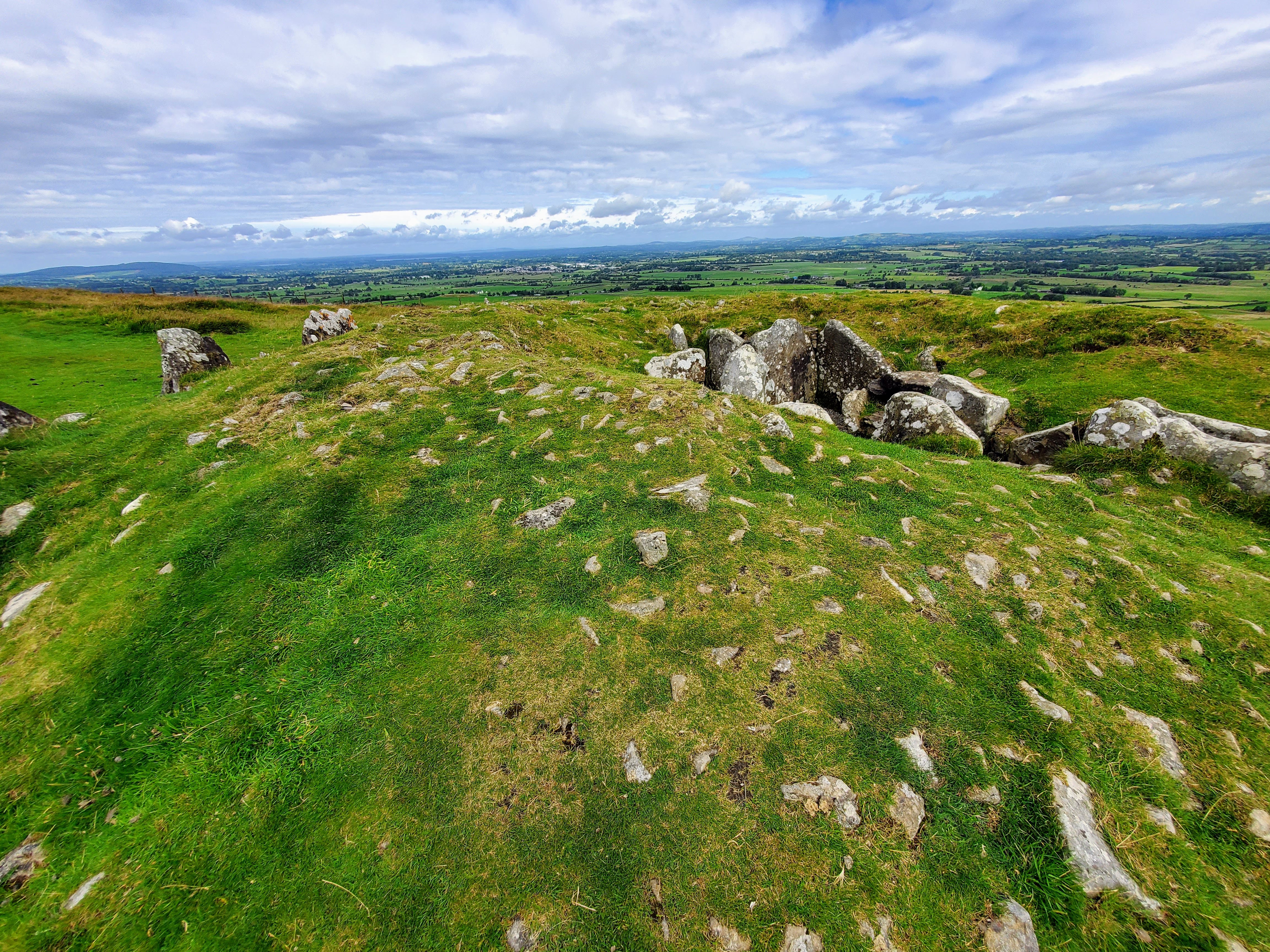
Photo: Scattered stones beside Cairn S, Loughcrew, Co. Meath, Ireland
I set out early in the morning hoping to be on the hill alone in solitude to breathe in the damp, cool air, feel the softness of the grass, to listen and to feel.
It was quite a trek up, and from a distance, the hillside almost looked as if stones were scattered randomly across the green as though dropped from some ancient hand. But as I walked closer, the scatters began to take shape into mounds, ridges and lines rising gently from the earth, as if the land itself had bones.
Each ridge stretched outward from a central cairn, like rays of an earthen sun or the many spines of something vast and old. And just to one side, a circle of stones sat in stillness, keeping watch like an eye of the earth half-open and remembering.
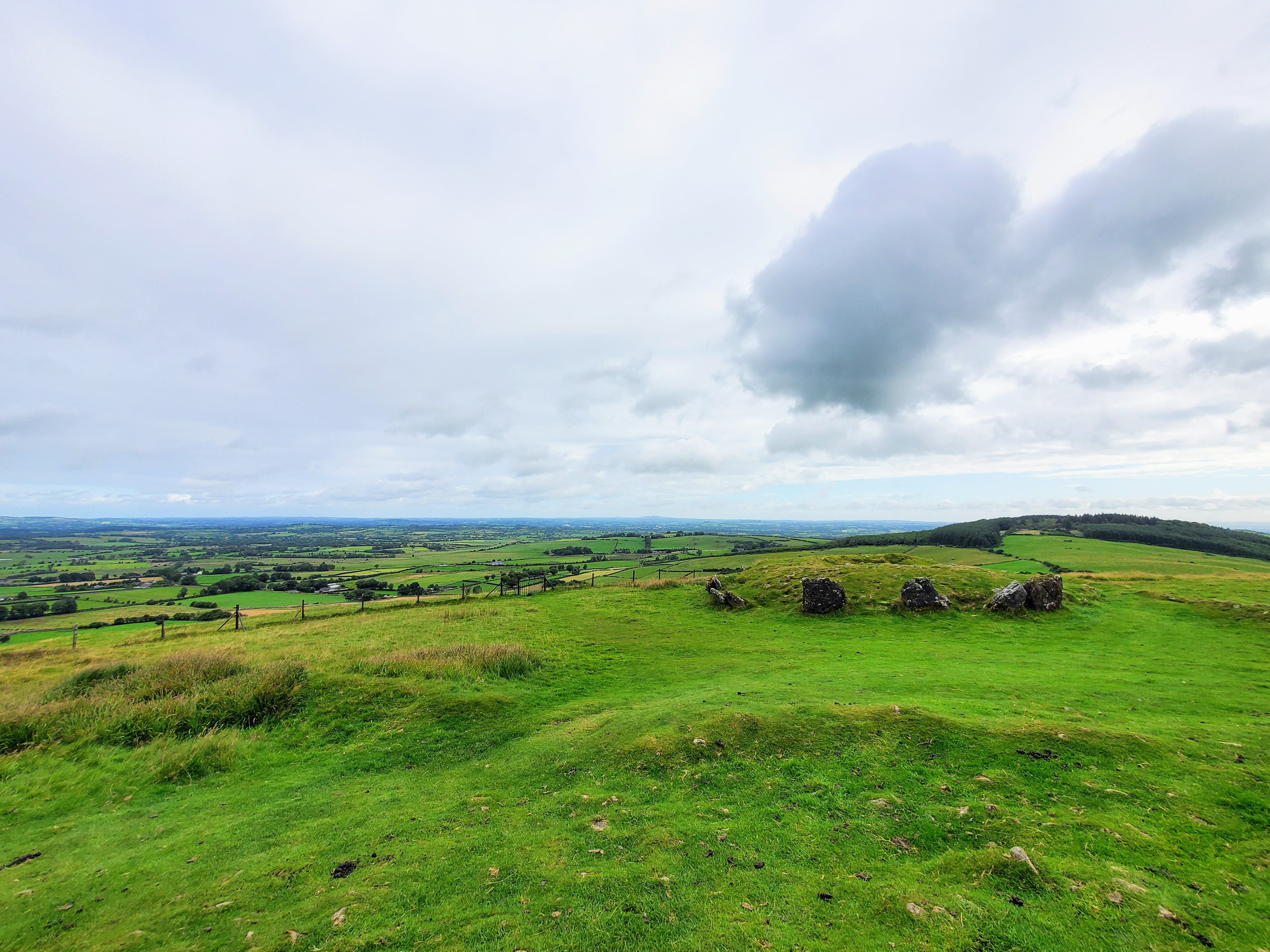
Photo: Small stone circle on Loughcrew overlooking the Boyne Valley, Co. Meath, Ireland
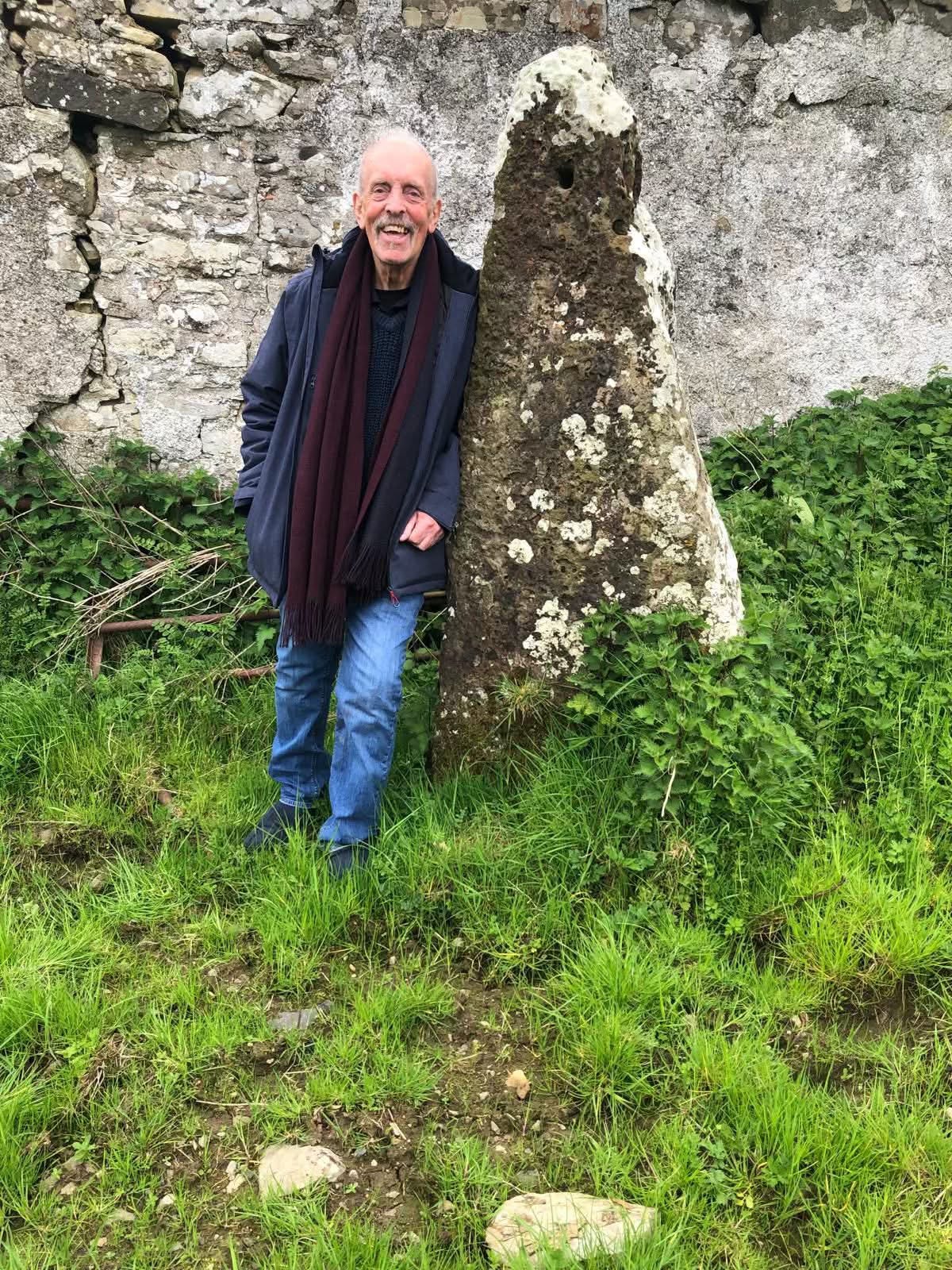
As I walked the stones, what at first seemed scattered began to reveal a pattern. Spines radiated from the central mound like vertebrae in the earth itself. Later, I remembered a conversation I had with Lar Dooley, who probably knew this land more deeply than anyone I’ve ever met. He did not see these cairns as burial tombs in the way archaeologists often describe them. To him, they were something far more alive. They were chambers of communion with the Otherworld, places where the Tuatha Dé Danann are said to have dissolved into the very landscape itself.
When I think of that now, it feels less like a theory and more like a remembering. Perhaps that’s what those old chambers really were, not graves, but gateways. They are places where the veil thins and the living can feel and listen to the heartbeat of the land.
They say the Cailleach dropped these stones from her apron as she crossed the hills, shaping the land with her own great hands. If that’s true, then these ridges and circles are what remain of her body… her vertebrae and heartbeat, her spine and even her vision. Walking among them, I could feel a timeless presence underfoot, as though each step was a pulse in both directions with the land moving through me as much as I through it.
Something stirred in my marrow that day. I didn’t understand it then, only that a deep ache began in my knees, slow at first, then searing. It wasn’t the kind of pain that feels like injury, but like awakening, as if something old and buried in the bones had been shaken loose.
It lingered for months after I came down from that hill, a quiet burning that stayed with me for some time. No amount of rest, movement, or nutrition seemed to change the sensation. It was asking not to be fixed, but felt, attended and presenced. I began to wonder if what was loosening in my body was something more than physical, something ancestral.
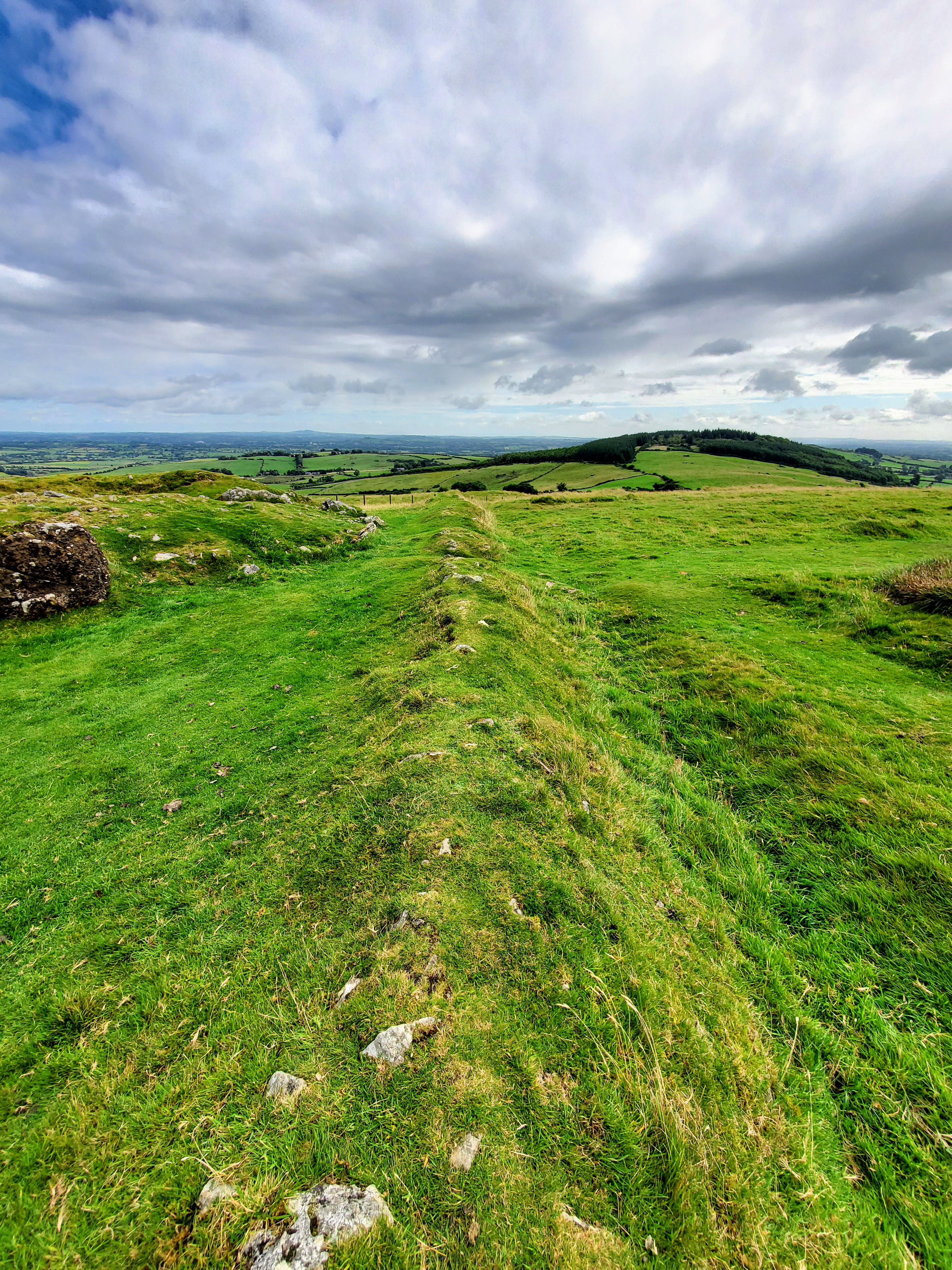
Photo: One of the several vertebrae-lined stone rows not-so-haphazardly placed upon this sacred site.
My maternal grandfather’s arthritis, the way his joints swelled and stiffened with weather and time, maybe that, too, was the land speaking through him, unintegrated and aching to be moved. Perhaps the ache in my own knees was his ache or the ache of generations before him still echoing through blood and bone. Perhaps the Cailleach herself had found a way to speak through a body that was willing to listen.
Modern medicine might call it genetic predisposition. But the old ways would say it’s ancestral memory stored in the marrow, the story of a lineage waiting to be integrated or released. And the land holds its own kind of memory, too. The stones, the wind, and the rhythm that reverberates beneath the hills at Loughcrew remember everything. Every step taken here is an act of communion, every ache seemingly a kind of initiation.
Something ancient moved through me on that hill, a force older than language and much older than my flesh. It was as if the marrow of my bones remembered its kinship with the stones beneath my feet. Something chthonic of the underworld and of deep, slow time awakened. The land was not simply speaking. It was singing through me, and my body was the instrument.
I’ve come to see the pain that followed me home not as a problem, but as instruction, the land teaching me in a language I could truly hear… a kind of slow alchemy. Our bodies are storytellers. And when they begin to speak, it’s best to listen.
The pain eventually subsided as I continued to connect with the land beneath my two feet back home in Houston and allowed the process of integration to deepen over the following months. The energy that created those unwanted sensations became medicine, and the medicine has become a kind of wisdom.
The body is its own oracle. When we quiet the impulse to fix, we begin to hear what it’s really saying. The ache itself becomes the teacher when given deep attention, patience, and time to heal. Because it’s never just the body that is healing. Sometimes, it just might be a lineage.
Postcript: Lar Dooley “set out on the trail of truth” just 13 moons after that Loughcrew pilgrimage. A true elder in the Irish spiritual community, his love and passion live on. A beautiful reflection filled with insights of tending the sacred site of Loughcrew can be found in his book, “Out of the Darkness: A Sacred Journey Into the Origins of Indigenous Irish Spirituality” and a wee chat we shared early last year.